



Wetland Birds
 Birds of Telangana
 Wetland Birds

Wetland birds are species that rely on marshes, swamps, flooded fields, rivers, lakes, and other waterlogged habitats for feeding, nesting, and resting, often needing shallow water and emergent vegetation throughout their life cycle.


Purple Heron
Large heron with rusty head and streaky neck; juvenile is extensively rusty brown on upperparts. Favors fresh marshes with tall reeds and other vegetation. Often more retiring than Gray Heron and rarely seen in open situations. Only likely to be confused with larger and bulkier Gray Heron, which is paler and grayer overall, with a stouter bill.


White Wagtail
Distinctive but variable: all plumages are some bold combination of black, white, and gray. Shows considerable variation in plumage across the world, but never has a clear, thin and contrasting eye-brow like White-browed or Japanese Wagtail. Occurs in varied open habitats, from wild grassy areas and wetlands to paved car parks and grassy lawns. Usually seen as singles, pairs, or small groups walking and running around, pumping the long, white-sided tail up and down. Identified easily in flight by its loud, thick and distinctive “tsee-tsee’ call.
Black-breasted Weaver
Male distinctive in breeding plumage, with extensive yellow forehead and black face, nape, and upper breast. Dark brown above with blackish streaks and dirty white below. Often the black on breast can be replaced with a pale throat, forming a black necklace, partial or complete, of variable width. Non-breeding males often show a much reduced breast band with dark patches on either side. Female and juvenile are brown and white, like females of other weavers, with a buffy eyebrow above a thin, dark eye-stripe. Nests communally. Breeding song is a series of low-pitched buzzes, not as loud as Baya Weaver’s. Mostly found close to water, near tall grass and reeds.
Streaked Weaver
Male in breeding plumage has a golden-yellow cap covering the forehead and crown, and a blackish face and throat. Dark brown above with rusty edges to feathers, and buffy white below with longitudinal dark streaks on the flanks and upper breast. Non-breeding males, females, and juveniles more similar to other weavers; they have a yellowish buff eye-brow that extends down around the back of the face, streaky flanks, and dark brown upperparts with long streaks on the back. More partial to water than Baya Weaver, nesting around reedbeds in wetlands. Noisy near breeding colonies. Males make a continuous chirpy “cheer” or “teaur” call, not as loud as Baya Weaver’s
Bluethroat
Beautiful thrush-like bird that tends to stay hidden. Dull gray above, but a head-on view reveals a stunning pattern of electric blue and orange on the throat (some variation in pattern across range). Females show fainter colors than males, sometimes lacking blue entirely, but are still very boldly patterned. On the dullest young females, look for bold white eyebrow and throat, necklace of dark streaks, and rufous on the base of the tail. Variable song includes imitations of other species among a jumble of trills, whistles, and chirps. Typically found in scrubby, brushy habitat, often in edge areas: reedbeds, overgrown fields, and thickets. Usually skulky but singing males can perch conspicuously atop a bush. Breeds across Europe and Asia into Alaska; winters from northern Africa to southeast Asia.
Pied Kingfisher
Boldly marked black-and-white kingfisher with short, bushy crest and glossy all-dark bill. Superficially similar to Crested Kingfisher, but smaller, with a much more distinctly patterned head and breast and less erect crest. Frequently seen perched in pairs or small groups. Often hovers over water when seeking prey. Inhabits a wide range of waterside habitats, from lakes to estuaries to mangroves. Gives a variety of sharp notes, as well as dry trilling and rattling calls.
Common Kingfisher
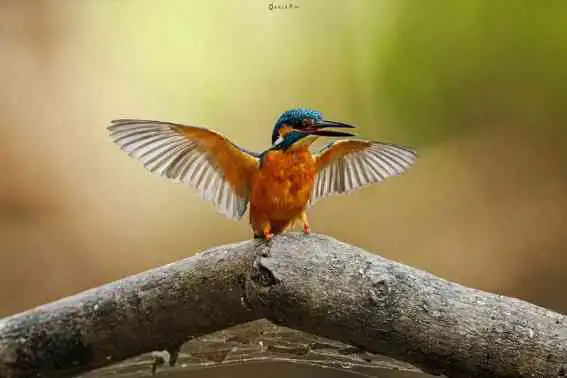
Beautiful little blue-and-orange bird with a long, pointed bill. Often rather shy and inconspicuous despite bright plumage. Found along rivers, streams, lakes, and ponds—almost any fresh or brackish habitat with small fish. Often perches quietly in trees over water; most often seen in very fast low flight as a turquoise flash over the water, usually flying away. Easily detected once its high, shrill whistled call is learned, even if the bird itself is hidden. The only small blue kingfisher over much of its range.
Brahminy Kite
A medium-sized raptor with a rounded tail unlike other kites. Adults are unmistakable with a white head and breast contrasting with otherwise brick brown plumage. Juveniles are a darker brownish-black with a paler head and prominent white patches under the wings. Usually associated with both inland and coastal wetlands in tropical Asia, but it is largely restricted to coastal wetlands in Australia where it is alternately known as “Red-backed Sea Eagle.” Call is a distinctive nasal, drawn out, “Kyeeerrh.”
Eurasian Spoonbill
Distinctive, large white wading bird with a spatula for a bill. Adult has short crest, yellowish breast patch. First year has paler bill, with fine black wingtips visible in flight. Sleeping birds have horizontal posture and bulging neck, vs. more vertical stance of egrets. Found in wetlands with shallow water (including tidal flats), where feeds by sweeping its bill side-to-side for crustaceans and small fish. May be confused with egrets when sleeping, but note stockier, more thickset overall appearance.
Black-headed Ibis
A large wader with a white body and bare black head and neck. Males and females look similar and both have grayish tail feathers. It probes into mud and shallow water with its long, down curved black bill, sometimes submerging its entire head. Found primarily around wetlands including agricultural fields and occasionally around coastal areas, but also seen foraging in dry fields and human-modified landscapes.
Glossy Ibis
Long, curved bill. Adults mostly dark with iridescent green and reddish tones. Very thin white border surrounding the dark facial skin. Dark eyes. Usually gregarious, it is found mainly in salty marshes and shallow wetlands. Unmistakable in most of its range, though American birds are best distinguished from White-faced Ibis by distribution and facial pattern.
Black-crowned Night-Heron
Stocky heron with neck usually tucked in. Adults overall pale grayish with black cap and back. Red eyes. Juveniles noticeably different, brown and streaky with yellow eyes. Often crouched under overhanging branches during the day. Feeds nocturnally for fish, frogs and other prey. Where it overlaps with Yellow-crowned Night-Heron, note large teardrop-shaped white spots on wing coverts which Yellow-crowned lacks.
Eastern Cattle Egret
Small, compact white heron with relatively short yellow bill. More often seen in dry habitats than other egrets, but also frequent in rice paddies and shallow wetlands. In the breeding season, look for bright orange head and breast, as well as a brighter bill. Leg color varies from reddish or yellow during the breeding season to black during the nonbreeding season. Juveniles have dark bill. Always note relatively short, thick neck and short legs compared with other egrets. Often gathers in flocks, frequently following large animals and field machinery.
Great Egret
Large, lanky, long-necked white heron. Size and black legs help separate from other egrets. Widespread and fairly common across the globe. Bill color varies across range: always yellow in the Americas, black in breeding season elsewhere. Occurs in any shallow wetland, including ponds, marshes, and tidal mudflats. Slowly stalks prey in shallow water. Often seen singly, but sometimes gathers in large numbers where food is plentiful. Breeds in colonies, frequently mixed with other egrets and herons.
Grey Heron
Generally quite common and conspicuous in wetland habitats from marshes and tidal flats to small ponds, ditches, and wet fields; nests colonially in tall trees. Mainly seen as singles or in small groups, standing quietly in or at the edge of water, less often hunting in fields. Plumage mostly gray overall, with paler neck; adult has white crown, black eyebrows, and black shoulder patch. Like other herons and egrets, flies with neck pulled in to form a bulge.
Black Bittern
Medium-sized heron of forested and vegetated wetlands, ponds, and lakes. All ages and plumages have dark upperparts and orange, yellow, and reddish striping on the neck and breast. Female and immature average browner with weaker contrast than males. Typically hides and hunts in vegetation similar to other bitterns but occasionally perches visibly on trees and bushes.
Cinnamon Bittern
Small heron of wet and open grassy areas such as flooded meadows and paddy fields. Uniformly bright rufous upperparts of adult male unmistakable. Female and juvenile have pale streaked belly, dark streaks and spots scattered on the wings and back, and are dark brown with some rufous tones above. Females often have light spotting on the wings, potentially causing confusion with female Schrenck's Bittern, which has brighter and more solid white spots and a prominent dark crown lacking in Cinnamon. Gives dry croaking clicks.
Yellow Bittern
Very small heron of marshy, well-vegetated water bodies. Adult pale orangish brown or yellow, depending on the light, with a narrow dark cap. Juvenile darker above with pale feather edges. Can be inconspicuous in dense vegetation, but frequently makes short flights; on flying birds, note dark flight feathers contrasting with pale yellowish wing coverts. Typically quiet, but occasionally gives harsh grating calls when flushed.
Spot-billed Pelican
A large pale waterbird with a hefty pinkish pouched bill marked with diagnostic dark spots on the upper mandible. The head is grizzled with a hint of a shaggy crest and the back of the neck is dark. Rings of bare skin around each eye that make this bird look like it's wearing glasses. In breeding plumage, the rump, sides, and underwing coverts are salmon pink and the breast ochre yellow. Often seen in large lakes and estuaries fishing in groups. Nests in noisy colonies in trees bleached by droppings.

