



Ch03-Karma-Yoga
 Bhagavad Gita at Work
 Ch03-Karma-Yoga

Bhagavad Gita - 3 Karma Yoga
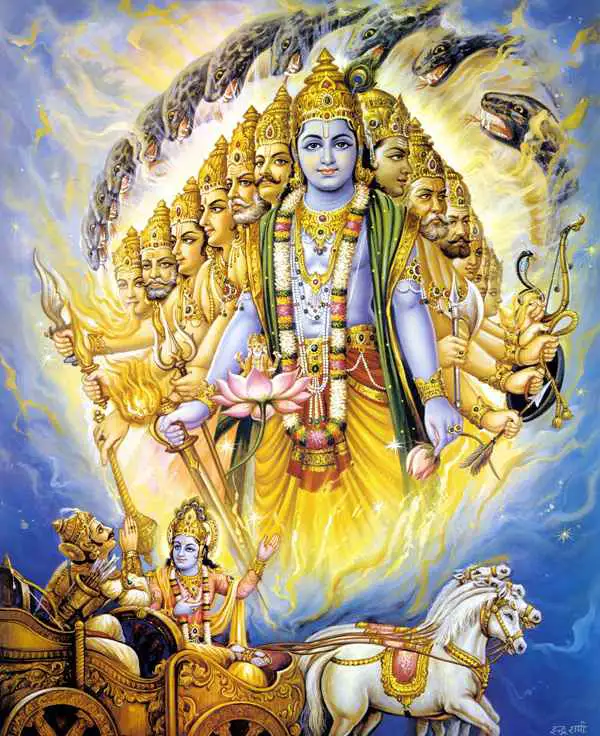


Arjun Uvaca:
Verse 1-3
Hey Janardan (Sri Krishna), if you consider knowledge to be superior to karma, then why do you push me to perform these gruesome deeds related to getting involved in the war and fight.
Arjun is asking Sri Krishna – tell me which path is better to reach the highest goal. Sri Krishna will explain latter that which path is better is not the answer.
Bhagawan is saying that the one who is engaged in action-oriented activities, that person should follow the path of karma-yoga. But, a person who has renounced worldly activities, for him/her the path of sanyasi can be followed for spiritual growth.
Everyone will choose a different path according to his/her natural tendencies. Unless a person reaches a certain level of maturity, it is difficult to choose the right path – Jnana-yoga or Karma-yoga.
Verse 4-6
Sri Krishna says that by restraining from action, a person does not gain actionless. Nor by renunciation alone can attain perfection (Sanyasi). No one for a moment remains without action, because all are compelled to perform action by the qualities of nature (rajas, satwa and tamas) – describe the nature of mind.
All paths including bhakti, sanyasi (Jnana - Gyan yoga) and Karma-yoga reach to the same ultimate goal of reaching highest level – enlightenment (merging with ONE).
Sri Krishna is developing a theme that it is natural to get engaged in some form of actions. It is unnatural for most people to renounce actions. Since you are designed for action as a Chattriya – you should redirect your action as a Karma-yogi driven by dharma and not driven by raga & dwesha.
Each and every aspect of human being is very difficult to address. We come to some common level of understanding with respect to moral, ethics and psychology of a person.
In our studies, we should explore how we can progress with the teachings of Bhagavad Gita.
Before becoming tyagi, we need to be adept in restraining the organs of actions. The one who sits with his mind dwelling upon sense objects is deluded. He is called hypocrite.
Verse 7-8
But one who restrains his senses with his mind, O Arjun, practicing karma-yoga with his organs of action, that detached person is superior. It is more important to control your senses and engage in worldly activities with organ of actions. Such a person who is detached with results of actions is superior – all of your actions become part of spiritual growth.
Prasad-budhi and Arpana-budhi are state of mind.


Bhagavad Gita – Chapter 3 – Karma Yoga
Verse 9
What is yagya? Any positive action dedicated to parmatma for the benefit of others would be called yagya. Any other actions performed will lead you towards the bondage with karma. A combination of intent, type of action (dharmic vs. adharmic) will determine whether the actions will lead you towards bondage with karma or actions performed as yagna. Example: Driverless car is driven by the safety of the passenger or the safety of the person walking on the curve.
In professional life, when you focus your efforts on a project with full dedication you will enjoy the project more and results will follow.
Verse 10-11
One explanation: Brahmaji after creating all people & the world along with the responsibility to get into the nature and giving back to the nature through yagna (Yagya) to take care of the nature.
How the universe was created in the context of yagna. Where do these celestial gods come from? Why and how did they come into existence?
Nature is made to sustain, and they support each other (parts). The entire life cycle is made to sustain. There is a material universe (manifested), and other universe is related to consciousness. We cannot relate to sentient world.
There are 1000’s types of energies that are defined in the name of gods – Agni, Vayu, Varsha. These gods signify a manifested energy and knowing energy. When we attach to a Shakti – then we start communicating with that energy. The benefits of that attachment with an energy starts giving the results.
When Brahmaji created the universe with energies, it was a positive action, selfless, not for the benefit of brahma, it was for the benefit of mankind. These attributes fulfil the requirements of Yagna. Later, Bhagawan says you can attach to the knowing energy as gods.
Bhagavad Gita – Chapter 3 – Karma Yoga
Continued the discussion on Yagna. In spiritual world there is no concept of sacrifice. Shakti signifies the consciousness and energy. It has awareness and can decide who gets the benefits of this energy. Prana shakti has awareness and it affects the parts of the body that needs that energy. For example, Prana shakti is a knowing energy which can remove the problems of the body (in certain parts).
- Shakti (All-inclusive Conscious Energy)
- Specific Conscious Energies (Manifestation of spiritual level)
- Yayu shakti is related to prana shakti
- Agni shakti is related to digestion; digestion (energy) has to be intelligent to remove the waste
3. Consciousness + Manifested Spiritual Energies (Sentient)
4. Manifested Physical Energies (Insentient)
Example: What is essential to sustain life – Ability to absorb oxygen in the body.
All gods dwell in your body as a form of energy. Ganesh dwells in mule chakra. Every god has a purpose to transmit energy. All mudras are meant to trigger certain energy. Havan mudra. When a vibration is triggered inside the body, then we start getting the benefits of the source of that vibration (gods). This is how you get the benefits of that god.
Verse 12
When a person continues to get the benefits of riches of the earth without giving back anything is called a thief. Law of Attraction is based on “like attracts like” principle; Gratefulness triggers satisfaction in you and this satisfaction starts the idea of giving; in return you get more blessings. When I nourish a particular vibration, that vibration nourishes you. When a person continues to amass wealth, then he/she continues to acquire more.
In summary, you need to trigger the energies of devatas (gods) to get the benefits. When you trigger the thought of gratefulness, it triggers the gratefulness then devatas will nourish you. In a complex world when you trigger “less/kam” you get less energy. When you attach this with performing karma/yagna.
Verse 13-16
The one who performs yagna for himself/herself is causing a sin (papa karma – the one who takes us down). Yagna takes us up. The intent (bhava) is very important before performing any action. This opens up our Heart Chakra that connects us with the divinity.
Verse 17-18
- Understanding – how mind and psychology works; how it works in this manifested world; also, the cause of manifested world; understanding will continue to develop; there is a knowledge that even we don’t know that it exists. For him there is some work to be done. Knowledge is infinite.
- Experiencing – when you start experiencing something, then you do not need any understanding because you have the Anubhav – now we are not talking about physical world. If you have seen Niagara Falls, you do not need to read the books about Niagara Falls. Now, it is not required for him to go there again. In spiritual area, there is no need to go there.
- Being – Now the objective is fulfilled, there is no need to work for himself/herself. Now, you work due to inspiration. There is nothing prescribed for him/her to do. When bhagawan is present in this Srishti, he/she will continue to perform according to the nature. Atma-Santushti – is the satisfaction of the mind. Later on, when you become one with Brahman, there is nothing prescribed for you to gain. All action that you will perform will be in harmony with nature. For your action – there is a prescription. For ME, I do this because I know the nature.
Bhagavad Gita – Chapter 3 – Karma Yoga
Verse 19-24
Shri Krishna is saying that you need to perform action without detachment. Thus, a person reaches the highest level. Bhava is very important. Arjuna is a role model, so whatever he does, people will follow. First you need to understand what bhava is.
Yudhishter example: Why didn’t you understand the lesson. Today, I did not get angry. Now I got it. When we understand the bhava, then experiencing it and last stage is becoming (enlightenment). Nature will force you to perform action. But you have mind and intellect, therefore, mind will drive you towards action. So, the level and attributes of bhava will take you towards the spiritual maturity.
In Verse 22-24, Shri Krishna is talking about Dwait – O Arjuna, for Me, there is nothing to be done in the three worlds, nothing to be gained which is not yet gained. Yet, I remain engaged in action. If I were not to engage in any action all the time, what will be the consequences? People would follow my example in all situations, O Arjuna. Therefore, people would perish, If I were not to perform action. I would become the agent of confusion. I would destroy these people.
Shri Krishna as an avatar is not burdened with karma of His own making. But He is taking upon the responsibility of good karmas of many people. Therefore, He performs these actions for the welfare of the mankind.
Discussion: Adwait vs. Dwait
When I say I am there, it implies you are there. Bhagawan is separate from me implies Dwait. In Adwait, aham is destroyed and you become part of the brahman, you reach beyond the mind. Whatever I understand means Dwait. Adwait is related to Anubhav (experience – becoming one with brahman).My Anubhav is in the present situation including past memories and future imagination.
Everything else is illusion. Time exists in the NOW form only. I have only experienced time in the present form. Whatever is converted into material is part of the Dwait, the observer (consciousness) is Adwait. When I become the conscious alone, then I am Adwait. When I behave like a part of material world, I am Dwait.
Example: I am able to see the object due to the light of consciousness (like a light of sun), when it falls on an object. We do not see the light of consciousness.
Samadhi:
- Dhyana samadhi – you get experience of oneness, but you get out of dhyana – you lose it.
- Gyan samadhi – You can experience oneness while being in physical world.
The Bhagavad Gita, a revered Hindu scripture, delves deep into the philosophy of Karma Yoga, emphasizing the importance of selfless action. In Verse 2.47, Bhagawan Shree Krishna imparts wisdom to Arjuna, stating:
You have a right to perform your prescribed duties, but you are not entitled to the fruits of your actions. This verse encapsulates the essence of Karma Yoga – emphasizing the significance of detachment from the outcomes of our actions. By focusing on performing our duties with dedication and sincerity, without being attached to the results, we can attain a state of mental equanimity and spiritual growth.
Note:
Karma – performance of your dharma; actions performed according to dharma.
- They are duty bound.
- Trust the process and don’t get influenced by the results/outcome.
- Complete the process with the best possible efforts.
In Verse 18.57, Bhagawan Shree Krishna reinforces the teachings of Karma Yoga by declaring:
In all activities, depend on Me and work always under My protection. This verse highlights the principle of surrendering one's actions to a higher power, trusting in the divine to guide and protect us. By acknowledging the presence of the divine in all our endeavors, we cultivate a sense of humility and devotion, understanding that we are mere instruments of a greater cosmic plan. Through practicing Karma Yoga with faith and dedication, we can transcend the ego and realize our interconnectedness with the universe, ultimately attaining spiritual fulfillment and liberation.
- Note:
This will be applicable when you have reached to stage – I am not the owner of actions.

